
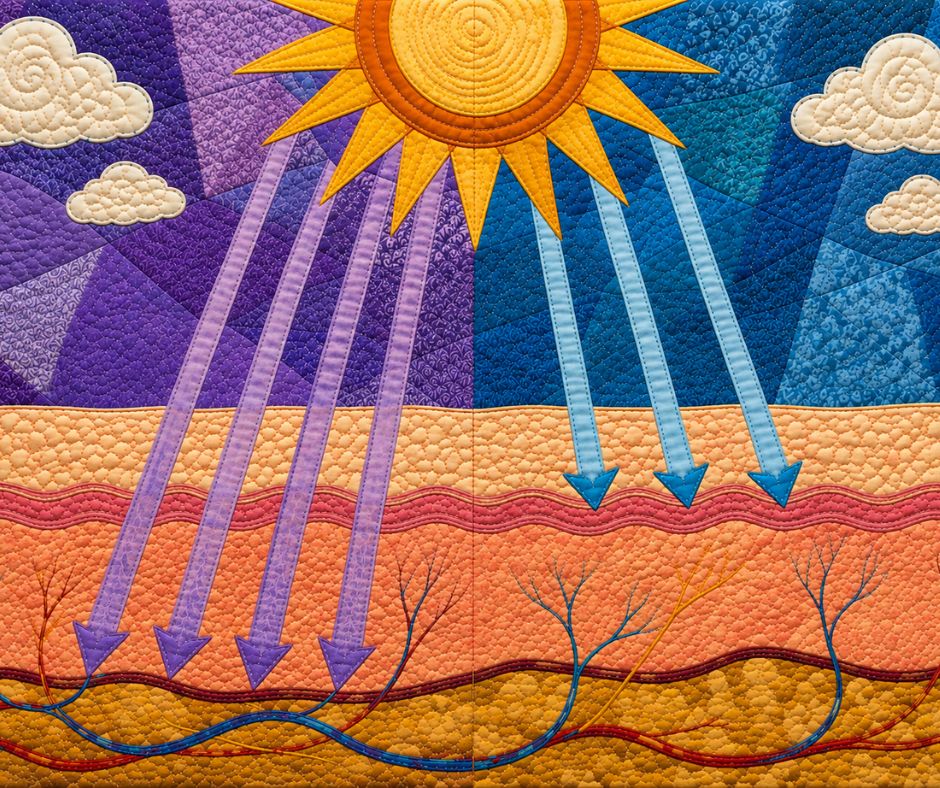
Most of us constantly hear that the sun can be harmful and we need to wear sunscreen whenever we go outside. But if we start understanding how UV rays from the sun actually affect our skin, we can better protect it daily. Ultraviolet radiation that damages our skin is not a single force, but is broken down into UVA and UVB. These different forms reach our skin in different ways and cause different kinds of damage. Understanding these differences can help us change the whole conversation around skin protection and make it feel less like a chore and more like something worth actually caring about.
What Is Ultraviolet Radiation and Why Does It Matter
Ultraviolet radiation, or UV radiation, is a form of non-ionizing electromagnetic energy produced by the sun. It is divided into three categories based on wavelength: UVA, UVB, and UVC. UVC (Ultraviolet C) rays are almost entirely absorbed by the atmosphere before they ever reach the Earth’s surface. The skin primarily interacts with UVA and UVB rays every single day. These two types of UV radiation behave differently when they come into contact with the skin. Together, they are responsible for a significant portion of the skin damage that accumulates quietly across a lifetime.
UV radiation interacts with our skin at a cellular level. Research shows that UV radiation can cause direct DNA damage. This can lead to abnormal cell changes that build up over time. Our bodies can repair some of that damage. But long-term exposure that builds across years can overwhelm our skin’s natural repair systems. This damage is why skin protection is a genuine health priority. It affects how the skin functions at its most fundamental level.
UVB (Ultraviolet B) Rays: The Visible Injury
UVB rays are the type most people are familiar with. These rays have shorter wavelengths and higher energy than UVA rays. They are the primary cause of sunburn. UVB damage over a long day outdoors can cause our skin to look red, tender, and inflamed. It primarily affects the outer layers of the skin, the epidermis. Where it can cause direct and measurable harm to the DNA inside skin cells.
The intensity of UVB radiation varies in ways that UVA does not. UVB is strongest during the middle of the day, typically between 10 in the morning and 4 in the afternoon, and it shifts significantly by season, latitude, and altitude. It is stronger in summer, closer to the equator, and at higher elevations. Near reflective surfaces like water, snow, or sand, UVB intensity increases because those surfaces bounce the rays back upward toward the skin.
At the cellular level, UVB causes DNA damage in the form of what researchers call cyclobutane pyrimidine dimers. These are abnormal bonds that form between DNA molecules when exposed to high-energy UV radiation. The skin has repair mechanisms for this, but when damage accumulates faster than the body can address it, the risk of mutation and abnormal cell growth rises substantially. This is the direct pathway through which UVB radiation contributes to squamous cell carcinoma, basal cell carcinoma, and melanoma.
UVA (Ultraviolet A) Rays: The Quiet, Deep Damage
UVA rays are the ones that we often overlook. They have a longer wavelength. This longer wavelength carries less energy than UVB rays but penetrates deeper into the skin. They move past the outer layer of the epidermis and into the dermis, where collagen, elastin, and the structural foundation of the skin live.
UVA rays are present all day and pass right through clouds and glass. If you are sitting near a window at work or driving with sunlight coming through the window, it counts as UVA exposure. Research shows that UVA contributes to the breakdown of collagen and elastin. This leads to the development of deep pigmentation changes and a process called photoaging, which includes wrinkles, sagging, and uneven skin tone that accumulate over time. UVA rays are also implicated in the development of skin cancer, including melanoma, through mechanisms related to oxidative stress and immune suppression within the skin.
Studies have highlighted that UVA exposure has a particularly strong effect on dermal fibroblasts, which are the cells responsible for producing collagen. When these cells are repeatedly damaged, the skin gradually loses its ability to maintain structure and elasticity. This is not something that happens overnight. It is a slow process that unfolds over years, which is exactly why daily protection matters well beyond beach days and summer months.
The Skin Barrier and Why Both Rays Threaten It
UV radiation can also undermine the skin barrier’s ability to provide our body’s first and most essential line of defense against infection, dehydration, and environmental harm. Both UVA and UVB rays contribute to photoimmunosuppression, which is a reduction in the skin’s local immune activity. This immune suppression can occur even with exposures that do not produce visible redness or sunburn. This means cumulative UV exposure diminishes the skin’s ability to fight off bacteria, maintain hydration, and recover from injury, even when no damage is visible on the surface. This matters most for older adults, people with chronic skin conditions, or anyone whose skin is already under stress.
UV radiation also encourages the production of enzymes called matrix metalloproteinases. These enzymes can break down collagen and the structural proteins of the skin. Over years of unprotected exposure, our skin can become thinner, drier, more fragile, and slower to heal. Understanding this makes it easier to see why sun protection is not just about preventing sunburn. It is about preserving the skin’s ability to do its job.
How to Protect Your Skin from Both UVA and UVB
Protecting the skin from both types of UV radiation does not require a complicated routine. It requires consistency and knowing what to look for.
Choosing the right sunscreen
Products labeled “broad spectrum” are formulated to block both UVA and UVB radiation. Sun protection factor (SPF) is a measure of protection against UVB rays. The high SPF number alone does not guarantee adequate UVA protection. A broad spectrum product with an SPF of 30 or higher is a solid daily baseline. Apply it to all exposed skin. Reapplying every two hours during outdoor activity or after swimming and sweating makes a meaningful difference.
Wear clothing with a UPF (Ultraviolet Protection Factor) rating, wide-brimmed hats, and sunglasses
Helps block UV light and provide consistent protection across the full spectrum. Seeking shade during peak UVB hours significantly reduces total UV exposure.
Consider UV-blocking window films
For anyone who spends long periods near windows or behind the wheel, UV-blocking window films are a practical and underused option worth knowing about.
Treating protection as a daily habit rather than a seasonal one
UVA rays do not take winters off. They do not skip cloudy days. Building daily broad-spectrum protection into a morning routine is one of the most straightforward and evidence-supported ways to preserve the skin’s long-term health and integrity.
Why This Matters Even More for Caregivers and Loved Ones
For anyone caring for someone with aging skin, a chronic skin condition, or a healing wound, UV protection is worth adding to the daily conversation. The same sun exposure that contributes to premature aging in healthy skin can significantly compromise already fragile or healing skin. UV-damaged skin is thinner, less elastic, slower to recover, and more vulnerable to breakdown over time.
Something as small as applying sunscreen before a loved one sits near a sunny window or steps outside carries real protective value that adds up across months and years. Skin health and overall health are not separate things. The skin protects everything beneath it, and supporting that function through everyday UV protection is one of the simplest, most meaningful investments in long-term wellbeing. The best time to start building these habits is not after something goes wrong. It is in the ordinary moments of daily life.