
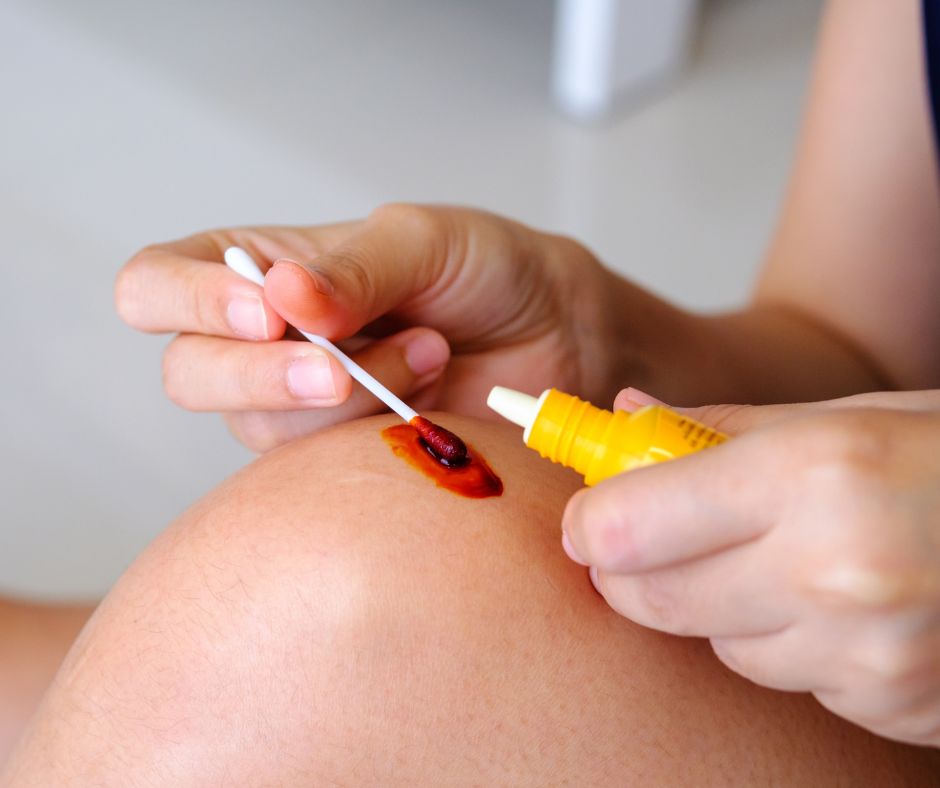
I remember as a child my parents or grandparents reaching for that brown bottle of hydrogen peroxide after a cut or scrape. It always stung and bubbled, but was it really working to help heal my wound? Common household antiseptics, such as hydrogen peroxide or iodine, have been trusted as the go-to solution for minor wounds. However, research tells a different story than the one most of us grew up believing. These products we’ve long associated with “cleaning a wound” are actually slowing the healing process by damaging the fibroblast and keratinocyte cells that your body depends on to repair itself. This process, called cytotoxicity, can damage fibroblasts, which build collagen, and keratinocytes, which help resurface the skin. The cells are the unsung workhorses of wound healing, yet they are surprisingly vulnerable to the very substances marketed to help wounds heal. Damage to them through cytotoxicity can slow recovery, increase scarring, and even worsen wound outcomes.
When caring for our wounds at home, such as the everyday cuts, scrapes, and skin breaks that we all encounter, there is good reason to take a closer look at what we’re reaching for and why. Some of these agents may still have clinical value under careful medical guidance, but routine use at home may do more harm than good.
Products that Maybe Harming the Wound Healing Process
Hydrogen Peroxide
Hydrogen peroxide (H₂O₂) is a chemical compound available over the counter, typically in a 3% concentration for home use. It is a mild antiseptic and bleaching agent that has been used in wound care, oral hygiene, and household cleaning for well over a century.
Hydrogen peroxide is famous for its bubbling action. That foam looks like it is “lifting out” dirt and bacteria. In reality, the bubbling occurs when hydrogen peroxide reacts with an enzyme in your tissues, called catalase. Bubbling occurs when our body breaks down hydrogen peroxide into water and oxygen.
Research shows that hydrogen peroxide can kill fibroblasts and keratinocytes, the very cells needed to rebuild skin. While it does reduce bacteria, it is likely to also delay wound closure by damaging healthy tissue. Those dramatic bubbles that form initially may actually slow your wound’s healing.
Iodine (Tincture of Iodine, Povidone-Iodine)
Iodine is a naturally occurring element with well-established antimicrobial properties. There are two types: tincture of iodine (iodine dissolved in alcohol) and povidone-iodine (brand name Betadine), a water-based formulation. Both work by releasing free iodine that disrupts bacterial cellular function.
Iodine is a powerful antimicrobial and is still used in controlled clinical settings. The challenge is that the amount of iodine needed to kill bacteria effectively can also kill the cells needed to repair your wound. Iodine use at home can cause a burning feeling (alcohol-based solution), irritate the skin, and impair tissue regeneration by reducing fibroblast growth. Skin reactions to Iodine can resemble chemical burns, including blistering, skin necrosis, and peeling. In controlled environments, such as surgical or healthcare environments, healthcare providers can use specific concentrations for short durations and can monitor for problems.
Merthiolate (Thimerosal)
Merthiolate is a brand name for thimerosal, an organomercury compound developed in 1927 and marketed by Eli Lilly as an antimicrobial agent in a range of products, including topical antiseptic preparations. It was a fixture in household medicine cabinets for decades, recognizable for its distinctive reddish color.
Merthiolate was once a staple in medicine cabinets. Earlier versions contained mercury, which led to safety concerns and prompted reformulation. Today’s mercury-free versions are still available, but the same core concern remains. The product may disinfect, but it may do so at the expense of the cells responsible for tissue repair. Research has shown that the effective antimicrobial concentration of thimerosal is toxic to human and animal cells.
Witch Hazel
Witch hazel, a plant-derived astringent, comes from the bark and leaves of Hamamelis virginiana, a shrub native to North America. Its active ingredients, tannins, flavonoids, and polyphenolic compounds, provide antimicrobial, anti-inflammatory, antioxidant, and wound-healing benefits, which medicine and cosmetology commonly use and value.
However, these benefits differ for open wounds versus intact skin. Research suggests that witch hazel can reduce fibroblast and keratinocyte activity when applied directly to open wounds. While it may feel gentle, it is not necessarily harmless when skin integrity is already compromised.
Rubbing Alcohol (Isopropyl Alcohol)
Isopropyl alcohol, commonly sold as 70% or 91% rubbing alcohol, serves as one of the most widely used disinfectants in home and clinical settings. Healthcare personnel classify isopropyl alcohol as Category I and consider it safe and effective for hand washing, surgical hand scrubbing, and patient preoperative skin preparation.
On open wounds, it can be painful and damaging. Alcohol destroys cell membranes, including the healthy cells needed for repair. The burning sensation many people associate with “cleaning” is actually tissue injury.
A Clinical Note
It is important to say that some of these cleansers still have a place in medical care. In situations where infection risk is high, healthcare professionals may use certain antiseptics under controlled conditions. Concentration, timing, and wound type all matter.
But for minor cuts, scrapes, and wounds at home, safer and less cytotoxic options are usually recommended.
Safer Alternatives for Wound Healing
Given the potential for traditional antiseptics to damage healing tissue, it’s important to know what safer options are available. The goal of wound care isn’t just to kill bacteria. It’s to create an environment where healthy tissue can regenerate efficiently. For most minor home wounds, these alternatives clean effectively while supporting the body’s natural repair process. The options remove contamination without the cytotoxic effects that can delay healing.
Water and Gentle Fragrance-Free Soap
For uncomplicated minor wounds, plain tap water and gentle fragrance-free soap are recommended as first-line cleansing. Wash minor cuts and scrapes with clean running water and mild soap to remove debris and bacteria.
Sterile Saline Solution
Saline is gentle, non-toxic, and effective for cleaning debris without harming healthy cells. Saline is especially useful when a wound needs irrigation to flush out dirt or small particles.
Hypochlorous Acid Wound Solution
This solution contains hypochlorous acid and is designed to clean wounds while remaining gentle to tissue. If you are struggling with transitioning away from using something like hydrogen peroxide, this could be a great option for you. My personal favorite, which I have used for years, is Vashe. I have used this both at home for my family and at work in the hospital or outpatient clinic.
Medical Grade Honey
Medical honey is medical grade manuka honey with antimicrobial properties that support healing without damaging fibroblasts and keratinocytes. I keep a tube of Activon Gel at home to address any wounds as needed.
Use Case is Everything
Traditional wound cleansers like hydrogen peroxide, iodine, Merthiolate, witch hazel, and rubbing alcohol have long been trusted for first aid. However, research has increasingly shown that they can be damaging and may slow the healing process. Some of these cleansers may have clinical relevance under medical supervision. I highly recommend safer alternatives for routine home care. However, based on everyone’s personal health concerns, it is always best to consult a healthcare professional before choosing a wound-care product, especially if you have diabetes, vascular disease, or other conditions affecting healing. Choosing gentle, non-toxic wound care options and consulting healthcare providers ensures the best outcomes for skin health and recovery.