
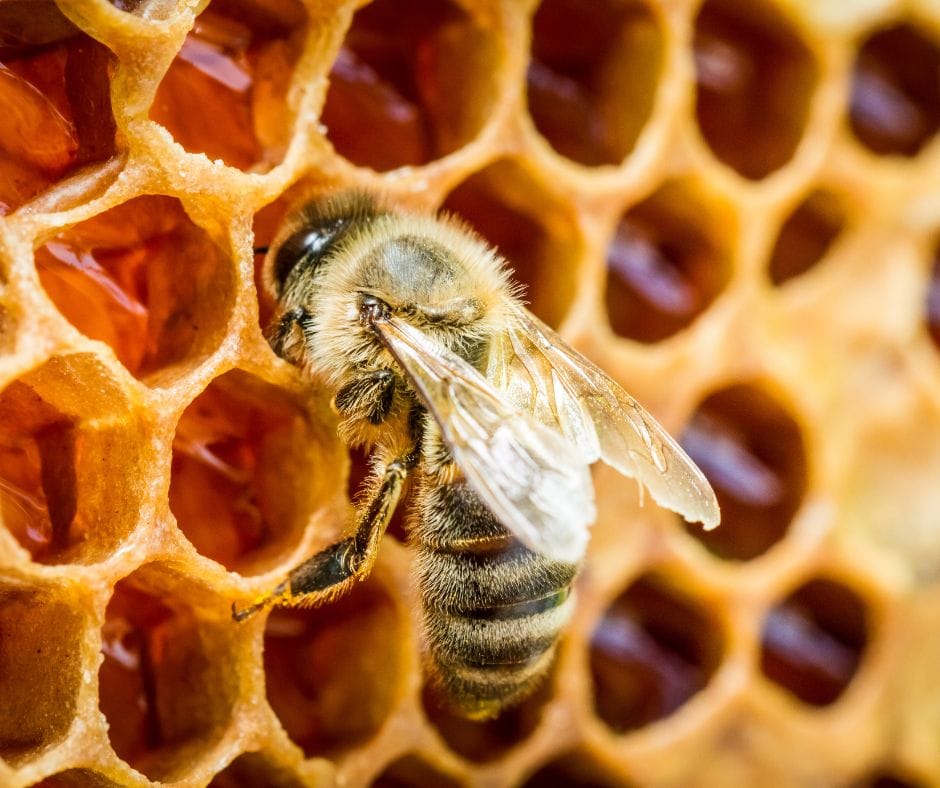
If you had told me when I was growing up that one of my most trusted tools in wound care would come from a beehive in New Zealand and Australia, I might have raised an eyebrow. But after years of working as a wound care nurse, I have fortunately been able to witness the healing power of honey firsthand. It is important to realize that medical-grade honey is not the same as other types of honey that we eat. It comes from the same type of honey as Manuka honey, but medical-grade honey undergoes a different level of quality control to improve its safety. This remarkable natural product has become one of my go-to products for wound care, especially in our home, as it not only promotes wound healing but also helps reduce our reliance on antibiotics. It is important to note that you should not use medical-grade honey if you have a bee or honey allergy.
Food-Grade Honey vs. Medical-Grade Honey
This distinction matters. For food-grade honey, even Manuka honey, manufacturers do not sterilize, filter, or standardize it as they do for use on wounds. It may contain dormant Clostridium botulinum spores or other contaminants. Manufacturers carefully sterilize medical-grade Manuka honey and produce it under rigorous quality controls, ensuring it is safe and effective for use on open skin and wounds.
The Power of Methylglyoxal (MGO)
What sets medical-grade Manuka honey apart from other honey and wound care products is its naturally high methylglyoxal content. This compound is known as MGO. MGO drives Manuka honey’s powerful antibacterial activity. It gives the honey healing properties that few other products can match. What I have come to understand is that MGO causes selective toxicity to bacterial cells. It also inhibits bacterial flagellation and disrupts bacterial cell division. This multi-pronged attack works all at once. That combined effect is a big reason medical-grade Manuka honey fights bacteria resistant to conventional antibiotics.
Understanding the NPA Rating Scale
The antibacterial strength of Manuka honey products is measured using the Non-Peroxide Activity scale, known as NPA. Any medical-grade product worth reaching for will carry a guaranteed rating above 9.5 on the NPA scale. NPA scale is typically not measured for food-grade honeys that you find at the grocery store.
How Medical-Grade Honey Supports the Healing Process
Beyond its antibacterial properties, medical-grade Manuka honey supports healing on multiple levels simultaneously. It creates a moist wound-healing environment, which is the optimal condition for tissue regeneration and lowers the pH of the wound bed, which discourages bacterial growth and encourages healthy tissue formation. It stimulates autolytic debridement, meaning it gently loosens and lifts dead or damaged tissue from the wound bed without any painful scraping or cutting. And it neutralizes wound odor rather than simply masking it. Most products do one or two of these things. Medical-grade Manuka honey does all of them together, naturally, with no synthetic additives and no risk of allergies for the vast majority of people.
Why the Natural Factor Matters to Me
There is something deeply meaningful to me, as a nurse and a mother, that most medical-grade honeys are completely natural. They are not engineered in a lab or formulated as a pharmaceutical product. It is honey, brought to a medical standard. What I know from years of wound care practice is that it reduces healing time and improves outcomes compared to conventional methods, and the simplicity of what it is matters just as much to me as what it does.
Why I Have Moved Away from Antibiotic Ointments
While antibiotic ointments offer important benefits, you should also recognize the real risks they carry, including allergic reactions and antibiotic resistance.
Topical Antibiotic Ointments Can Cause Allergic Reactions
Allergic contact dermatitis from these products is far more common than most people realize. Neomycin sulfate and bacitracin are among the most well-known causes of allergic contact dermatitis. Sensitization rates over time are also significant. Reactions typically cause localized skin redness and itching, but in very rare cases, anaphylaxis when applied to broken skin. You could potentially develop this sensitivity over time.
Allergic Reactions Are Often Mistaken for Infections
What makes this particularly frustrating is that allergic reactions to topical antibiotics are frequently misdiagnosed as infections. This can lead to increased antibiotic use, greater sensitization, and a cycle that serves no one. I have seen patients treated for a presumed infection that turned out to be allergic contact dermatitis from topical antibiotics.
Topical Antibiotics Contribute to Antibiotic Resistance
Beyond allergy, there is the issue of antibiotic resistance. As a wound care nurse, I have watched the impact of antibiotic resistance grow more serious over the course of my career. Topical antibiotic ointments work through narrow mechanisms that make it easier for bacteria to adapt and resist them over time, and using them routinely on minor wounds contributes to that problem. Bacteria do not develop resistance to Manuka honey the way they do to conventional antibiotics, and that is a distinction I find impossible to ignore. It is one of the core reasons physicians and wound care professionals recognize non-antibiotic antimicrobials, such as medical-grade honey, as a legitimate and valuable part of modern wound care.
Making the Switch Is Easier Than You Think
As a wound care nurse, I believe deeply in educating patients, caregivers, and families about all the tools available to them and helping them make informed choices. I have learned over the years that medical-grade Manuka honey is not a trend or a passing alternative. It is a clinically sound, FDA-recognized product with real and meaningful advantages over many of the synthetic options we have relied on for decades. Physicians and wound care professionals support evidence-based wound care practices, and medical-grade honey fits squarely within that standard. Not every medical-grade honey product is the same. For me, the price, availability, and clinical quality matter. The product I have chosen is Advancis Activon Tube. It is one of the lowest-priced options, available on Amazon and commonly used in clinical settings, mainly in Europe.
If you are ready to stop reflexively reaching for the antibiotic ointment and start giving your skin something that genuinely works with its own healing process. The good news is that medical-grade Manuka honey is more accessible than ever.