
When we talk about health, the conversation almost always starts and ends with diet and exercise. Eat better. Move more. And while those things matter, I want to share something with you that research is making impossible to ignore. What a long and vibrant life is really made of has just as much to do with the heart and spirit as it does with the body. We are whole beings, and the health of the body simply cannot be separated from the health of the mind, the warmth of community, or the quiet strength of the soul.
What the World’s Longest-Living Communities Can Teach Us
The blue zones introduced us to places in the world where people age with remarkable grace and live unusually long, full lives. Okinawa, Japan; Sardinia, Italy; Nicoya, Costa Rica; Icaria, Greece; and Loma Linda, California. These communities have some of the the highest concentrations of centenarians in the world. Centenarians are people who have reached 100 years of age or older. Remarkably many remain mentally sharp and emotionally resilient well into those final decades. Historical research indicates that genetics account for about 20 to 25 percent of longevity. This means that how we live, our relationships, our purpose, and the communities we belong to all matter.
Yes, diet and daily movement mattered, but they were not the whole story. In Sardinia, people typically walk steep hills every day and eat mostly plants. But they boast rich family bonds and spiritual traditions passed down through generations. Many have a profound sense of belonging to something more than themselves. Their faith, optimism, and resilience are strongly associated with life satisfaction and mental well-being as they aged. These practices are not separate from health but woven into the fabric of it.
While spiritual engagement and religious practice are associated with increased longevity, it is not belief alone that produces these effects. The way of life that grows from genuine faith, community, a sense of meaning, and daily habits that help lead us toward something greater than ourselves.
The Mind and Body Were Never Meant to Be Separate
Our inner lives shape our physical health in ways we are only beginning to fully understand. Older adults who maintained regular social connection had meaningfully better cognitive functioning over time than those who spent years more isolated. Civic participation and spiritual engagement lowered the risk of cognitive decline. And when physical activity was combined with strong social bonds, brain health fared significantly better than exercise alone could produce.
The truth is we as human beings need each other. Our bodies respond when we consistently surround ourselves with people. Our stress hormones settle, our heart rate slows, and our immune system can actually start strengthening. The feeling like you belong to someone or something changes the way our body functions at a cellular level. The people who truly know us, care about us, and show up for us can make this difference. Those people are different because they will help you when you fall down or you need someone to listen (Ecclesiastes 4:9-10 NIV). Because it is good medicine when we have a cheerful heart, but when our spirit is crushed, it can dry up our bones. (Proverbs 17:22 NIV).
When we lack connection for long stretches, or we are surrounded by the wrong people, our body can register it as a threat, like hunger or physical pain. Being or feeling unsupported, uncared for, or isolated is not simply the feeling of loneliness. It is hard on the heart, brain, and body in ways that are now well-documented. We were simply not built to carry the weight of life alone, and the science is finally catching up to what the people who love us have always known.
Why Faith and Spiritual Health Matter
A quiet, contemplative prayer is one of the most deeply human practices found across many faith traditions. It is a gentle turning of the heart toward something greater than the noise and weight of daily life. Stillness and resting can be as impactful as the words we use or what we ask for. Reflective spiritual practice helps produce real, measurable changes in the body. It helps lower stress hormones, reduces inflammation, and supports a stronger immune response. Perhaps more importantly, it can provide steadiness, a sense of being held, and a renewed capacity to face what’s next. Isaiah 40:31 NIV says that “Those who hope in the Lord will renew their strength. They will soar on wings like eagles. They will run and not grow weary.” Those words were written for tired people, and they can help us find strength.
Why Physical Health Alone Is Not Enough
For decades, the fairly simple formula for healthy aging has been: watch what you eat, stay active, and the rest will follow. And while those things genuinely matter, they only account for part of the picture. Physical discipline alone, without connection, without meaning, without something that feeds the spirit, leaves some of the most important drivers of long-term health completely unaddressed.
Social isolation and loneliness are now identified as serious public health concerns. They are linked to cardiovascular disease, cognitive decline, and a shorter life overall. Having a genuine sense of purpose and feeling rooted in relationships and community tend to provide us with stronger immune systems, better mental health, and a greater capacity to recover from illness and hardship. This is what scientists now call the whole-person model of aging. It is the understanding that physical care works best alongside social connection, spiritual meaning, and a felt sense of belonging. One without the others is simply not enough.
Practical Ways to Start Living This Way
The beautiful thing about all of this is that none of it requires a gym membership, a perfect diet, or anything that costs money. The habits that support deep, lasting health are often the simplest ones, and they are available to every one of us.
Start moving naturally by choosing to park a little further from the entrance to the store. Spending an afternoon in the garden. Or taking the stairs instead of the elevator. When movement feels like living rather than performing, it becomes sustainable and even joyful.
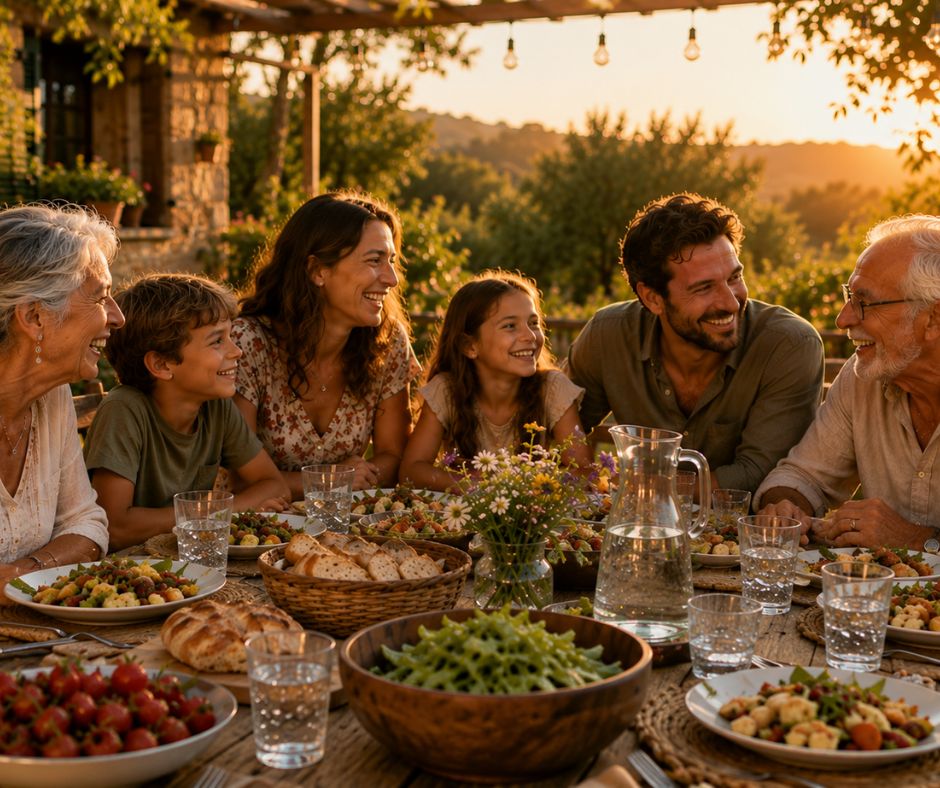
Eat with others to help nourish something in us that eating alone cannot touch. A shared meal, however simple, is an act of care and belonging.
Fostering a clear sense of purpose a reason to get up each morning, helps people age better and face hardship with more grace.
Nurture the spirit through prayer, quiet reflection, gratitude, or worship, whatever draws you gently inward and upward, calms inflammation, quiets the stress response, and gives the mind and heart a place to rest and be restored.
These are not trends. They are timeless, deeply human, and profoundly true.
The Life You Live Is the Health You Build
We have spent a long time treating the body like a machine, something to be optimized through the right inputs and outputs. But we should see ourselves differently because we are not machines. We are ecosystems. Our relationships, our beliefs, and our sense of meaning form the soil in which our health either takes root and flourishes or slowly fades.
Healthy aging is not about chasing youth or outrunning time, but living fully with a steady heart and a connected spirit. No matter how many years we are given, we can live rich with meaning, warmth, and peace. Longevity does not live inside a pill or a plan. It lives in the way we choose to love, belong, and in the faith we carry with us through every season of life.