
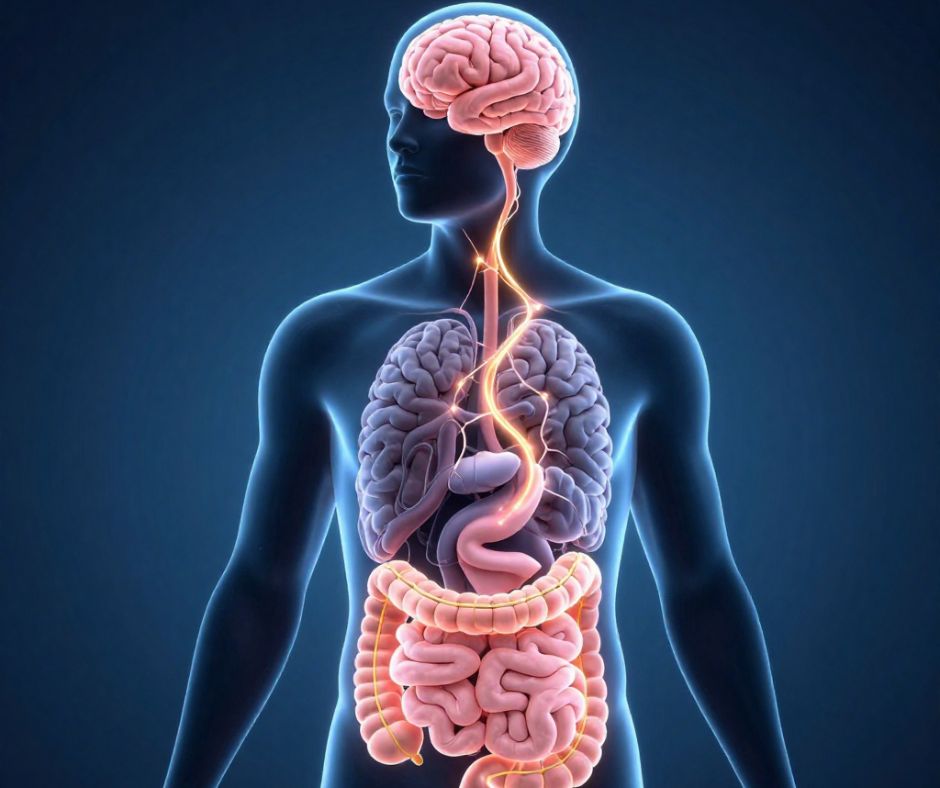
Have you ever had a “gut feeling” about something? Or noticed that when your stomach is upset, your mood is too? Maybe during a stressful season of life, your digestion changed right along with your sleep and patience. If so, you have already experienced the gut-brain connection (also called the gut-brain axis) in real life.
As adults and especially as we age, we are often told to protect our brains. Read books. Do brain games. Listen to podcasts. We try to keep it sharp. But science is showing another simple and powerful truth. Caring for your gut also means caring for your brain. What you put in your mouth every day can shape how clearly you think, how steady your mood feels, how resilient you are to stress, and how strong your immune system functions.
What Is the Gut-Brain Connection?
The gut-brain connection is the constant communication system between your digestive system and your brain. Think of it as a two-way highway. Your brain sends messages to your gut, which is why stress can cause stomach pain or diarrhea. Your gut also sends messages back to your brain, producing many of the same chemical messengers that affect mood and focus, including serotonin. The vagus nerve is the primary nerve that controls this communication.
Inside your digestive tract live trillions of bacteria and other microbes. This community is called the gut microbiome. These microbes help break down food, make vitamins, support your immune system, and create compounds that travel to your brain. They also make up about 70% of your immune system. That means your gut is not just about digestion. It is a training ground for your immune cells. A healthy gut microbiome helps your immune system distinguish between what is harmful and what is safe. It helps prevent overreactions that can lead to chronic inflammation, and it strengthens your defense against infections.
| When this system is balanced, many people notice | When it is out of balance, people may experience |
| More stable mood | Brain fog |
| Clearer thinking | Low mood or irritability |
| Better sleep | Fatigue |
| More regular digestion | Bloating or constipation |
| Steadier energy | Increased stress response |
| Fewer frequent infections and better overall resilience | More inflammation and weaker immune response |
This connection is not just a theory. Research shows that the gut microbiome plays a role in inflammation, mental health, cognitive function, immune regulation, and healthy aging.
Why This Matters More as We Age
As we move through adulthood, our bodies quietly change in ways we may not always see at first. Over the years, our gut bacteria can begin to shift. Decades of processed foods, repeated rounds of antibiotics, ongoing stress, restless sleep, and diets low in fiber all leave their mark. Add in medical conditions or certain medications, and the balance of our gut microbiome can slowly shift, looking very different from what it was in our younger years. At the same time, our brains become more sensitive to inflammation and metabolic changes. Our immune systems also change with age. Some people experience a weaker immune response, while others develop chronic low-grade inflammation.
Chronic inflammation can affect memory, mood, immune strength, and long-term brain health.
Here is the part that is empowering. What you eat can either calm inflammation or fuel it. Your daily food choices can help support a healthier gut microbiome, which in turn supports your brain and helps regulate and strengthen your immune system. You really can influence this system.
How What You Eat Affects Your Brain and Immune System
We often hear that we should be careful what we put into our minds. We are told to watch our thoughts, guard our emotions, and be mindful of the media. That is wise. But it is just as important to be mindful of what we put into our gut.
Here is how food becomes brain and immune support. When you eat fiber from vegetables, fruits, beans, and whole grains, your gut bacteria break it down into short-chain fatty acids. These compounds help reduce inflammation and support the lining of your gut. A healthy gut lining helps prevent a leaky gut by keeping harmful substances from leaking into the bloodstream, which may otherwise trigger inflammation that can affect both the brain and the immune system.
When your gut lining is strong, your immune system can focus on true threats instead of being constantly activated by irritation. This balance supports clearer thinking and a more stable mood. Eating fermented foods like plain yogurt (I enjoy plain Greek yogurt) with live cultures, kefir, sauerkraut, or kimchi helps introduce beneficial bacteria that can balance your microbiome. A diverse microbiome is linked with stronger immune regulation and improved resilience.
When you eat foods rich in omega-3 fats, such as fatty fish, nuts, and seeds, you support both brain cell structure and anti-inflammatory pathways that influence immune health.
On the other hand, diets high in added sugars, refined carbohydrates, and ultra-processed foods have been linked to changes in gut bacteria and increased inflammation. Over time, this may affect mood, energy, immune balance, and cognitive health. This is not about perfection. It is about patterns.
A New Way of Thinking About Food
Many of us grew up thinking about food in terms of calories, weight, or comfort. What if we began asking a different question? Instead of just asking ourselves, “Will this make me gain weight?” We should start asking, “Will this help the good bacteria in my gut, support my brain, and strengthen my immune system?” Instead of thinking of fiber as just something for our bowel movements, we should think of it as nourishment for our inner ecosystem and immune system. While fermented foods may seem strange and sometimes smell a little funny, we start to recognize them as tools for balance.
This mindset shift can be powerful. You are not just eating to fill your stomach. You are feeding a living community inside you that talks to your brain and guides your immune system every single day.
Overcoming Old Habits and Beliefs
Your brain matters. Your memories matter. Your mood matters. Your immune system matters. Your peace matters. And every meal is an opportunity to care for them.
Many adults say, “I have always eaten this way.” Or, “It is too late to change.” Research suggests it is not too late. The gut microbiome can begin to shift within days to weeks of dietary change. Even in mature adulthood, positive changes are possible for both brain and immune health.
We know that healthy eating can sometimes seem expensive or complicated, but there are ways to reduce costs.
• Frozen vegetables are just as nutritious as fresh.
• Canned beans are affordable and high in fiber. Rinsing them under water can significantly reduce sodium content.
• Oats are inexpensive and powerful for gut health.
You are not aiming for gourmet; simple meals can be deeply nourishing. You are aiming for consistency. The gut-brain connection reminds us that we are not separate parts. We are connected systems. What happens in your gut does not just stay in your gut. It speaks to your brain, your immune system, and your energy.