
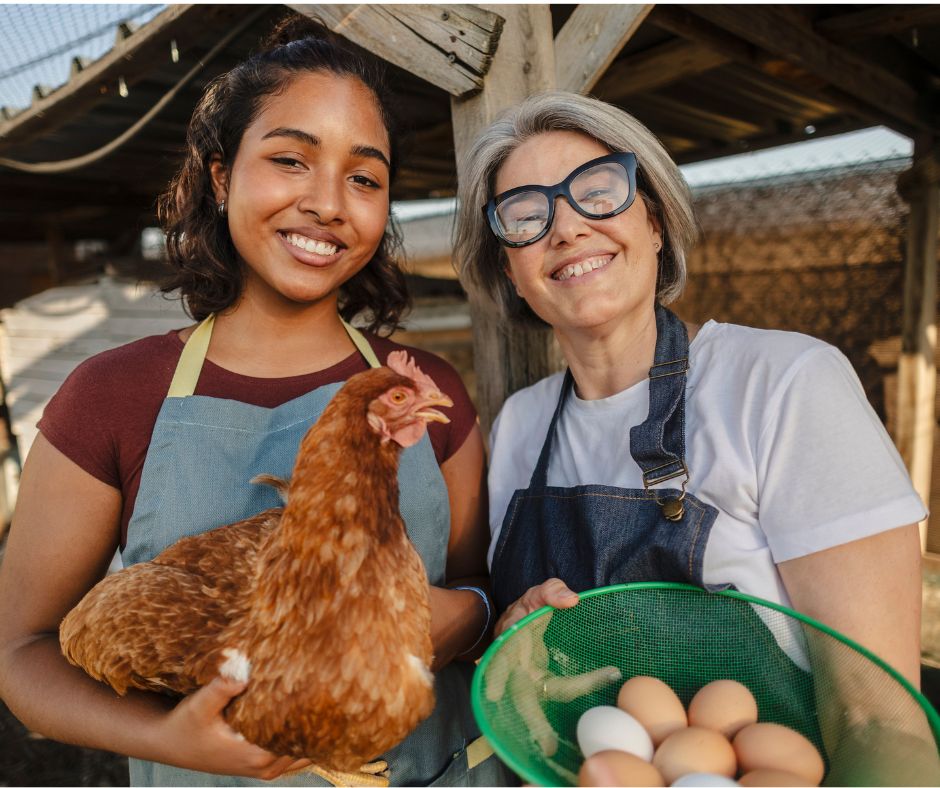
The first time we tried a fresh carton of eggs from the farmer’s market, it just felt different. Most of our lives, our family has been getting our eggs at the grocery store. The idea of getting unwashed, fresh eggs directly from the farmer was never on our minds. However, once we started looking into the differences between grocery eggs and farm stand eggs, we found measurable differences. Our eggs last longer, and the way a hen lives shapes the nutrients inside the eggs. What she eats matters. Whether she ever gets outside into real sunlight matters too. Eggs from local pasture-raised hens contain substantially more omega-3 fatty acids, antioxidants, and vitamin D, and taste fresher. We made the switch on purpose because once we understood the quality difference, it started to make more sense for our family. If you have wondered whether the differences matter, let me show you what we found.
Why the Hen’s Life Changes What Is Inside the Egg
An egg is a reflection of its hen. Picture a bird who spends her days outdoors. She scratches through grass, hunts bugs, and nibbles greens. Now picture a bird kept indoors on a fixed ration of grain. Their diets are not remotely the same, and that difference does not disappear. It travels straight into the yolk.
Researchers show the nutritional gaps are real when comparing eggs from pasture-raised hens against eggs from conventional systems. Pasture-raised eggs contain roughly twice the carotenoid content and about three times the omega-3 fatty acid content. They also show a far more favorable omega-6-to-omega-3 fat ratio. That balance matters, because a diet weighted more evenly between these fats is widely considered better for heart and brain health.
Sunshine is one of the most underrated ingredients in an egg. Hens make vitamin D from sunlight much the way we do. Hens with outdoor access lay eggs richer in it. In one analysis of hundreds of eggs, free-range and organic eggs contained about 42 percent more vitamin D3 than eggs from hens raised entirely indoors. So many of us run low on vitamin D, especially through the darker months, and that alone is a real reason to care where your eggs come from.
What You Will Notice at Your Own Stove
The color of the eggs can also indicate differences. The deep gold of a good yolk comes from pigments called carotenoids, which are the same compounds that make carrots orange and kale dark green. In fact, research on laying hens confirms that the diet directly affects both the carotenoid content and the yolk color. When a hen eats grass and greens and insects, those pigments concentrate. When she eats a uniform indoor ration, they do not. You should ask the seller how the birds are raised and what they are fed. It is the single most valuable question you can ask at an egg table.
Here is what tends to stand out once you start paying attention:
- In really fresh eggs, the yolks stay tall and rounded instead of spreading flat, which holds up beautifully for frying and poaching.
- The color deepens from pale yellow to gold, sometimes to something close to sunset orange.
- The whites stay thick and gathered close to the yolk rather than running watery across the pan.
- The flavor comes through fuller and more distinct, especially in scrambled eggs or a plain soft boil.
The Bloom Helps Them Last Longer
Fresh farm eggs have what is called a bloom, or cuticle. It is an invisible protective membrane over the shell. It seals the egg from oxygen and bacteria. Grocery store eggs lack this protective layer and thus do not last as long.
The reason comes down to washing. In the United States, grocery store eggs are washed and sanitized before they ever reach the shelf, and that washing strips away the thin natural cuticle that helps block bacteria such as Salmonella from working their way through the porous shell. Once that layer is gone, refrigeration is not optional. Washed eggs last about 2 months in the refrigerator. Unwashed eggs can last about 2 weeks on the counter and about 3 months in the refrigerator. Be sure not to wash your eggs until you are ready to eat them.
Why We Made the Switch
My husband and I deliberately started buying our eggs from local farmers’ markets. We wanted to be more thoughtful about what we fed our family, and eggs were one of the easiest places to start. What we did not expect was how much we would learn. These sellers know their birds, and they love to talk about them. The farmer will tell you which hen laid which and what that hen has been foraging all week.
The health benefits brought us in, and they keep us coming back. But there is something to be said for knowing where your food comes from. There is more to be said for being able to ask the person who raised it. If you have a market or farm store nearby, that is available to you too. It costs nothing to walk up and start a conversation.
What This Means for Your Grocery List
Let me be practical because sometimes we can’t get farm-fresh eggs. Grocery store eggs are safe, affordable, and genuinely nutritious. If that is what fits your budget and your week, you are feeding your family well. Try looking for labels that say “pasture-raised eggs,” but you have nothing to apologize for. This is not an all-or-nothing decision.
But if you are able, spring and summer are the best time for them to be in abundance, and the research is clear enough to act on. Hens with real outdoor access and a varied diet lay eggs with more omega 3s, more antioxidants, and more vitamin D. Eggs are something you eat several times a week, every week, for years. Small differences compound.
So here is a concrete place to start. Buy one dozen from a farm stand or market this week. Ask the seller how the hens are raised, because that answer matters far more than any label. Then crack one into a hot pan and see for yourself.